
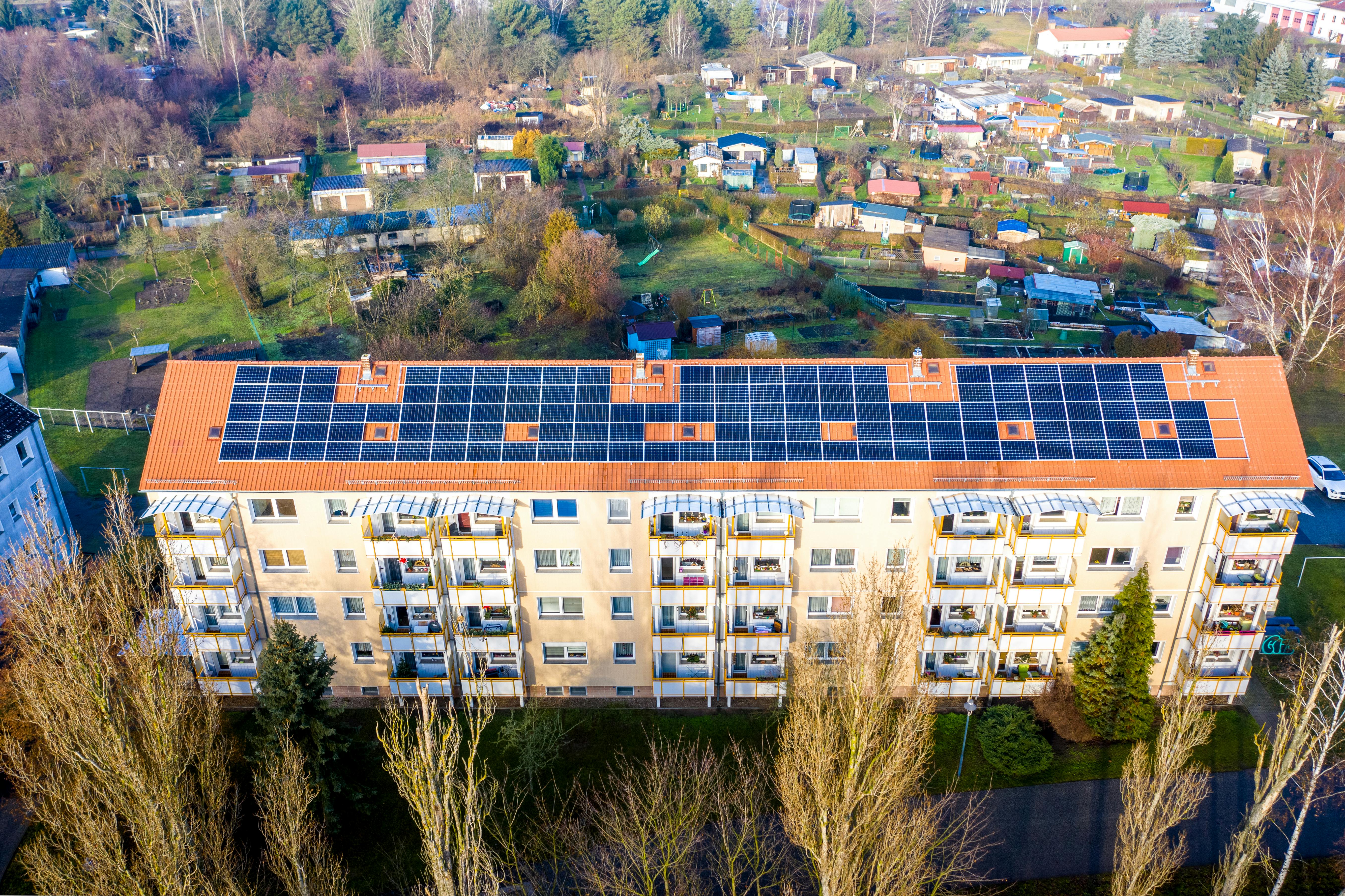
Rooftop & Group Captive Solar
Greenveyil Energy Pvt Ltd offers two primary solar deployment models tailored to residential, commercial, and industrial energy consumers across India, structured strictly according to consumption patterns and regulatory frameworks.
Rooftop Solar
Rooftop solar involves installing photovoltaic (PV) panels directly on the rooftop of a residential, commercial, or industrial building. The generated electricity is used on-site, drastically reducing dependency on grid supply.
This model is ideal where adequate unused rooftop space and structural capacity are available.
CAPEX Model
Client invests upfront and completely owns the system. Maximum long-term savings accrue over 20–25 years.
OPEX / PPA Model
Greenveyil installs and maintains the system. The client strictly purchases generated electricity at a pre-agreed tariff lower than grid rates.
How Rooftop Solar Works
1. Installation
Panels on rooftop surface
2. Generation
Panels generate DC power
3. Conversion
Inverter converts to AC
4. Consumption
Electricity used on-site
5. Net Metering
Excess exported to grid
Core Benefits
- Lower monthly electricity bills
- Utilization of idle rooftop space
- Reduced transmission losses
- Faster implementation timeline
- Net metering benefits (state dependent)
Most Suitable For
Financial & Regulatory Framework
Group Captive projects operate under the Indian Electricity Act provisions and specific state-level open access policies. This architecture enables long-term tariff stability and partial independence from grid price volatility.
- ✓Equity participation requirements
- ✓Minimum consumption commitments
- ✓Open access transmission agreements
- ✓Long-term power purchase contracts
Group Captive Solar
Group Captive Solar is an off-site solar power generation model where multiple consumers jointly invest in or subscribe to a central solar plant. Electricity generated from the plant is rigorously allocated to participating members under structured agreements.
Particularly relevant for commercial and industrial consumers with high energy demand but limited rooftop availability.
How Group Captive Works
1. Development
Off-site plant constructed
2. Participation
Entities buy shareholding
3. Allocation
Energy divided by share
4. Transmission
Via open access framework
5. Settlement
Structured tariff payments
Ideal Industrial & Commercial Profiles
Rooftop vs Group Captive
Choosing the right model depends on your load profile, space availability, and regulatory alignment.
| Factor | Rooftop Solar | Group Captive |
|---|---|---|
| Location | On-site (At your facility) | Off-site (Remote Solar Farm) |
| Space Requirement | Rooftop structure strictly required | No on-site space required |
| Best For | Residential & Medium Commercial | Large Commercial & Industrial Hubs |
| Regulatory Structure | Net Metering Framework | Open Access Framework |
| Scalability | kW to small MW limits | Unlimited MW scale infrastructure |
Cost-Saving Example Profile
A mid-sized manufacturing unit paying ₹8.50/unit to the grid utilizes a Group Captive model to lock in solar power at ₹4.50/unit via a PPA.
*Indicative figures varying by state regulation.
Why Greenveyil
Our focus remains exclusively on solar infrastructure tailored rigorously to Indian regulatory and grid environments.
- Technical feasibility assessment
- Complex financial modeling support
- Grid & regulatory coordination
- Precision EPC execution
- Long-term O&M services
Frequently Asked Questions
Do I need to own the rooftop for Group Captive Solar?
No. Group Captive solar is an off-site model. The solar plant is built elsewhere, and the generated power is supplied to your facility through the existing electricity grid.
How long does a Rooftop Solar installation take?
Depending on the system's size and regulatory approvals, an industrial or commercial rooftop installation typically takes 6 to 12 weeks from planning to grid synchronization.
Are there tax benefits for choosing the CAPEX model?
Yes. In India, businesses investing through the CAPEX model can claim Accelerated Depreciation (AD) benefits, significantly reducing their tax liabilities.
Schedule a Solar Model Consultation
Understand whether Rooftop or Group Captive solar is right for your exact energy profile.